

What follows is what a thorough tune-up typically includes, and what they should explain before they leave.
What is a “professional tune-up” for an air conditioner?
A professional tune-up is a preventative service where a technician inspects, cleans, tests, and calibrates key components so the system runs safely and efficiently. They should also look for early signs of failure like worn capacitors, blocked drains, or low airflow and document what they find.
It is not the same as a repair, although minor fixes may be done on the spot with approval.
What should they check first when they arrive?
They should start with a quick conversation about symptoms, usage, and any recent changes. Then they typically perform a basic visual inspection of the indoor and outdoor units, looking for obvious issues like corrosion, oil staining around joints, loose covers, pest damage, or abnormal noise.
They should also confirm the make, model, and type of system so service steps match manufacturer requirements.
What electrical and safety tests are usually included?
They should assess electrical health as part of a thorough air conditioner service Hornsby, since many common system failures originate from electrical issues rather than mechanical faults. A comprehensive service typically includes verifying supply voltage, measuring current draw, inspecting terminals for signs of heat damage, and tightening electrical connections where it is safe and appropriate.
During an air conditioner service Hornsby visit, technicians may also test capacitors and contactors, confirm proper electrical isolation, and ensure the system’s safety protections are functioning correctly. If any readings fall outside acceptable tolerances, the technician should clearly communicate the potential risks and recommended corrective actions.
How do they test cooling performance and airflow?
They should verify the system is actually moving enough air and delivering the right temperature change. That usually means measuring return and supply air temperatures, checking fan operation, and assessing airflow at vents or at the indoor unit.
If the temperature split is poor, they should look for causes like dirty filters, blocked coils, fan issues, or duct leakage rather than guessing.
What cleaning is normally part of an air conditioner service?
Most tune-ups include light to moderate cleaning to remove the buildup that reduces efficiency. They usually clean or replace filters (depending on type), clear dust from accessible indoor unit areas, and clean the outdoor coil surface to improve heat transfer.
They should avoid aggressive methods that bend fins or force water into electrics. If the system needs a deep clean, they should quote it separately and explain why.
Do they clean the indoor coil and blower wheel?
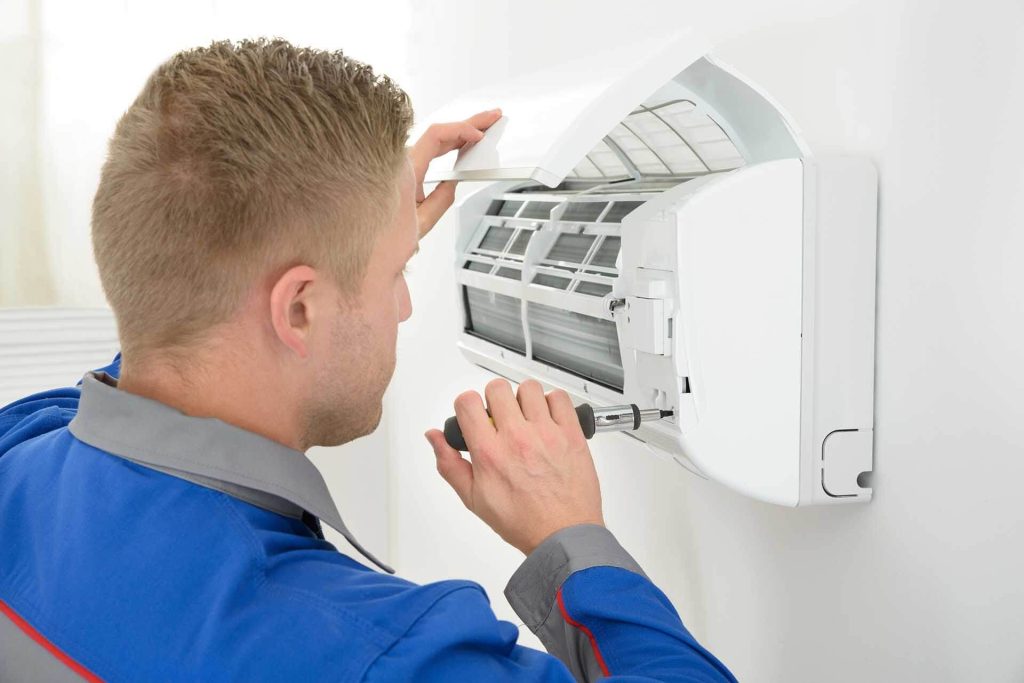
They typically inspect the evaporator coil and blower wheel and recommend cleaning if there is visible dust, mould, or lint restricting airflow. In many standard services, they only clean what is safely accessible without major disassembly.
If the coil or wheel is heavily contaminated, they should propose a deeper clean because that work takes more time and may require removing covers, protecting surrounding areas, and using coil-safe cleaners.
What do they do with the condensate drain and water leaks?
They should check the drain line and drain pan for blockages, slime, or overflow marks. A simple flush or vacuum clearing is often included if access is straightforward.
They should also confirm the unit is level and draining correctly, because poor drainage can cause water damage and shut the system down. If they see signs of repeated overflow, they should recommend a more thorough treatment.
Will they check refrigerant levels during the service?
They can assess refrigerant health, but it should be handled correctly. They may check operating pressures and temperatures, and look for signs of undercharge or restriction, but they should not “top up” refrigerant as routine maintenance.
If refrigerant is low, they should explain that it usually indicates a leak. The professional approach is leak testing and repair, then charging to specification, not adding gas without addressing the cause.
What should they inspect on the outdoor unit?
They should inspect the condenser fan, coil condition, cabinet, and clearances around the unit. They may check the fan motor for noise or play, confirm the unit is stable, and ensure airflow is not blocked by leaves or vegetation.
They should also look for corrosion, damaged fins, or signs the unit is short cycling. These clues help prevent compressor strain and expensive failures.
Do they calibrate the thermostat and controls?
They should check thermostat operation, settings, and basic accuracy. For systems with advanced controls, they may verify communication, error codes, and correct modes.
They should also ensure the system responds properly to heating or cooling calls and that fan settings match what the household expects. If the thermostat is poorly placed or misused, they should offer practical guidance.
What should they say about filters and indoor air quality?
They should explain what filter type the system uses and how often it should be cleaned or replaced based on local conditions. In Hornsby, dust, pollen, and pet hair can change the ideal schedule, so generic advice is not enough.
If they notice odours, visible mould, or persistent irritation complaints, they should recommend targeted solutions like deeper cleaning, better filtration, or ventilation improvements.
How do they identify parts that are “about to fail”?
They should use measured signs, not vague warnings. Common examples include a weak capacitor reading outside tolerance, a noisy fan motor, overheating terminals, or abnormal current draw.
They should show readings where possible and explain consequences and urgency. A good technician separates “monitor this” from “replace now,” so owners can budget without panic.
What paperwork or reporting should be provided after the service?
They should provide a short summary of what they tested and cleaned, what readings were taken, and what recommendations were made. Ideally, it includes notes on temperature split, electrical checks, coil condition, and any fault codes.
They should also document any repairs performed and confirm warranty implications if applicable. If they cannot explain results in plain language, the service is not truly complete.
How long should a proper tune-up take?
A standard tune-up often takes 45 to 90 minutes, depending on access, system condition, and whether there are multiple indoor heads. If they are in and out in 15 minutes with no measurements, it is unlikely they completed a thorough service.
Time alone is not the metric, though. The key is whether they tested, cleaned, and documented meaningful results.
When should they recommend repairs versus a replacement?
They should recommend repairs when the system is otherwise healthy and the fix improves reliability or efficiency at a reasonable cost. They should recommend replacement when major components are failing, parts are unavailable, or running costs are consistently high for the performance delivered.
They should also factor in age, condition, and how often the system has needed service recently. The best advice is evidence-based, not sales-led.
What should homeowners in Hornsby ask before booking?
They should ask what is included, what tests are performed, and whether the technician will provide recorded measurements. They should also ask whether coil cleaning, drain clearing, and electrical testing are part of the base service or billed separately.
They should confirm licensing, insurance, and how they handle refrigerant issues. Clear answers upfront usually mean fewer surprises later.
FAQs (Frequently Asked Questions)
What does a professional air conditioner tune-up in Hornsby typically include?
A professional air conditioner tune-up in Hornsby is a preventative service where a technician inspects, cleans, tests, and calibrates key components to ensure the system runs safely and efficiently. It includes checking for early signs of failure such as worn capacitors, blocked drains, or low airflow, and providing practical advice on what to fix now versus later.
What initial checks does an air conditioner technician perform during a service visit?
Technicians start with a conversation about any symptoms or recent changes in usage. They then perform a visual inspection of both indoor and outdoor units, looking for issues like corrosion, oil stains, loose covers, pest damage, or abnormal noises. They also confirm the make and model to tailor the service according to manufacturer requirements.
How are electrical and safety aspects tested during an air conditioner service?
Electrical system integrity is assessed through a structured diagnostic process, including verification of supply voltage stability, measurement of operating current draw against design specifications, inspection of terminals for thermal degradation, secure tightening of accessible connections where compliant, and functional testing of capacitors and contactors. Additional checks include confirming safe isolation procedures prior to servicing and validating that protective devices operate within expected parameters. Any deviations from tolerance thresholds are documented and communicated with clear risk implications for system reliability, safety, and performance continuity.
From a preventative maintenance perspective, standard air conditioner cleaning procedures and HVAC coil and filter maintenance protocols focus on restoring airflow efficiency and heat exchange performance without introducing component damage.
Standard servicing typically includes the cleaning or replacement of air filters depending on condition, removal of dust accumulation from accessible indoor unit surfaces, and careful cleaning of the outdoor condenser coil to maintain optimal thermal transfer efficiency. This process is performed using controlled methods to protect fin integrity and prevent water ingress into electrical assemblies. Where contamination is severe or system performance is significantly impacted, deep chemical cleaning or advanced coil restoration is recommended and quoted as a separate service intervention.
How do technicians assess cooling performance and airflow during maintenance?
They measure return and supply air temperatures to check temperature split, verify fan operation, and assess airflow at vents or the indoor unit. If performance is poor, they investigate causes such as dirty filters, blocked coils, fan issues, or duct leakage rather than guessing.
Will refrigerant levels be checked during an air conditioner service in Hornsby?
Technicians may assess refrigerant health by checking operating pressures and temperatures for signs of undercharge or restrictions. However, they do not routinely ‘top up’ refrigerant; if levels are low indicating a leak, they recommend leak testing and repair followed by charging to specification rather than just adding gas without addressing the cause.